

Overview
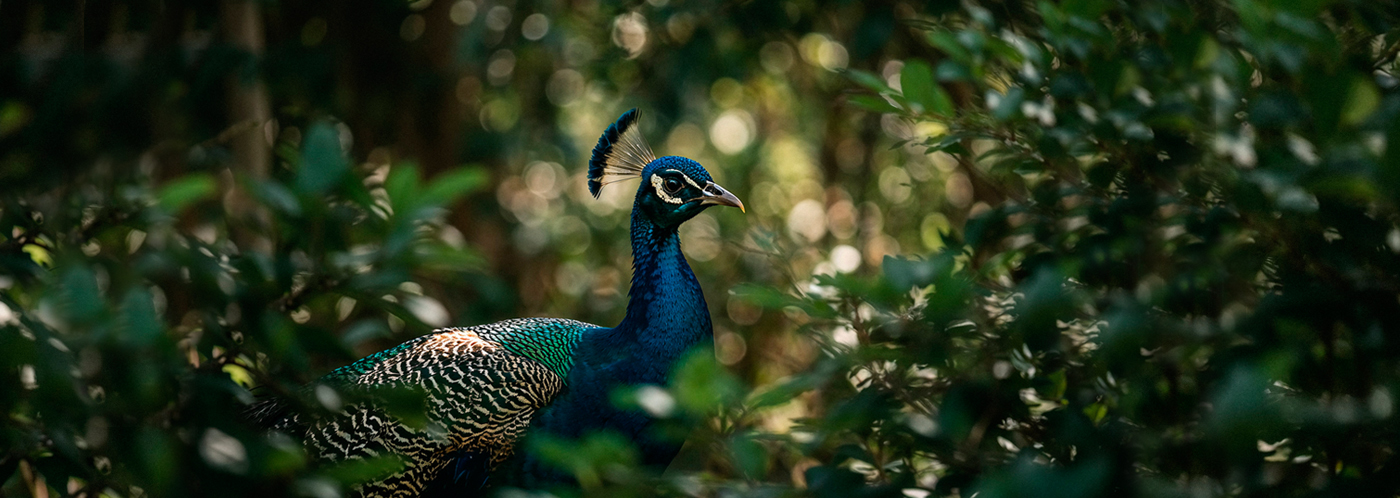
Embark on an immersive bird-watching journey across South India’s finest habitats, beginning in Bangalore and unfolding through Mysore, Kabini, Masinagudi, Ooty, Parambikulam, Munnar, Thekkady, and Thattekad. This thoughtfully curated tour takes you through a remarkable range of ecosystems—from dry deciduous forests and mist-laden hill stations to lush rainforests and tranquil wetlands. Spot iconic species such as hornbills, raptors, woodpeckers, flycatchers, and endemic Western Ghats birds. With early-morning walks, forest safaris, and time for photography, this tour is a perfect blend of nature, learning, and serene exploration for passionate birders and nature lovers alike.
Trip Duration - 17 Days
Grade - Premium
Accommodation - 16 Nights Hotel Stay
Category - Nature Trails

Arrive at Bangalore Airport in the morning and drive to Mysore, stopping en route to visit Kokkarebellur Bird Sanctuary.En route between Bangalore and Mysore, visit Kokkarebellur Bird Sanctuary, a unique and charming conservation area known for the rare coexistence between the local village community and migratory birds. The sanctuary has earned international recognition for this harmonious relationship.Kokkare Bellur is one of the few nesting sites in India for the Spot-billed Pelican and is also home to Painted Storks and other migratory birds. The name Kokkare Bellur comes from the Kannada word “kokkare,” meaning crane. Visitors may witness nesting activity, especially during the breeding season.After the visit, continue your drive to Mysore. Upon arrival, check in to your hotel.Overnight stay in Mysore.

Once the capital of a former princely state, Mysore is renowned for its majestic palaces, well-laid gardens, and rich traditions of silk weaving, sandalwood, and jasmine. The city is often referred to as the “City of Palaces,” with the magnificent Mysore Palace being its most iconic landmark.The name Mysore is deeply rooted in Indian mythology. According to legend, Goddess Chamundi defeated the demon Mahishasura here, from whom the city derives its name. Mysore served as the capital of the Wodeyar Dynasty until India’s Independence. Morning Visit – Ranganathittu Bird Sanctuary. In the morning, proceed to Ranganathittu Bird Sanctuary, popularly known as the bird paradise of Karnataka. Spread across approximately 40 acres, it is the largest bird sanctuary in the state and consists of six small islets formed along the banks of the River Kaveri.Around 170 species of birds have been recorded here. Regular breeding species include Painted Stork, Asian Openbill Stork, Spoonbill, Woolly-necked Stork, Black-headed Ibis, Lesser Whistling Duck, Indian Shag, Stork-billed Kingfisher, Egrets, Cormorants, Oriental Darter, Spot-billed Pelican, and Herons. The Great Stone Plover and River Tern also nest in the sanctuary, along with large flocks of Streak-throated Swallows.The peak birding season is from November to June, with January and February offering excellent sightings of over 30 species of migratory birds. Nearly 50 pelicans have made Ranganathittu their permanent habitat.Return to the hotel for lunch.Evening at leisure. Overnight stay in Mysore.

After breakfast, drive to Kabini, a destination blessed with pleasant weather throughout the year. The landscape is a harmonious blend of rolling farmlands, gentle hills, cool breezes, and dense forests rich in wildlife. Adding to its beauty is the vast Kabini Reservoir, shimmering in the valleys and forming the lifeline of the region. The Kabini River, which originates in the Wayanad district of Kerala, flows eastward before merging with the River Cauvery, eventually draining into the Bay of Bengal. It is the largest river within Nagarhole National Park and was dammed in 1974 as part of an irrigation project. During the summer months, the river becomes a vital water source, drawing large numbers of wildlife including Asiatic Elephants, Tigers, Leopards, Gaur, Sambar, Spotted Deer, and other herbivores. The river also forms a natural boundary between Bandipur and Nagarhole National Parks, both of which are designated Project Tiger Reserves. Evening Wildlife Safari – Nagarhole National Park. In the evening, enjoy a guided safari in Nagarhole National Park in specially designed vehicles that offer excellent opportunities for wildlife viewing. Nagarhole boasts one of the highest densities of herbivores in Asia. Scientific studies estimate an average of 108 large herbivores per square kilometre. The park’s herbivore population includes Muntjac, Chital, Sambar, Four-horned Antelope, Gaur, Wild Pig, Asian Elephant, Common Langur, and Bonnet Macaque. Supporting this rich prey base is a strong population of predators, with Tiger, Leopard, and Wild Dog (Dhole) being the park’s principal carnivores. Overnight stay in Kabini.

Morning, birding around the hotel. Evening safari. Overnight at Kabini.

Drive to Masinagudi and check in at the hotel upon arrival. Situated at the confluence of three states—Karnataka, Tamil Nadu, and Kerala—Mudumalai Wildlife Sanctuary lies amid the dense forests of the Nilgiri Hills and is regarded as one of the richest wildlife sanctuaries in South India. The sanctuary is the region’s prime attraction, renowned for its remarkable biodiversity and the presence of rare and diverse flora and fauna. Mudumalai offers a truly immersive safari experience, thanks to its varied forest types, which include tropical moist deciduous forests, southern tropical dry thorn forests, and tropical dry deciduous forests. This ecological diversity supports a wide range of wildlife and makes every visit unique.The sanctuary is also a delight for birdwatchers, with over 200 species of birds recorded here. Wildlife commonly seen includes monitor lizards, hyenas, jackals, various species of deer, panthers, and antelopes, all thriving in this tranquil natural setting. In the evening, enjoy a birding excursion in the surrounding area. Overnight stay in Masinagudi.

Enjoy an early morning birding session in and around Masinagudi, exploring its diverse habitats that support a rich variety of avifauna. The region offers excellent chances to spot species such as Malabar Lark, White-bellied Minivet, Small, Ashy, Rosy and Scarlet Minivets, Bonelli’s Eagle, Spotted Owlet, White-browed Bulbul, Yellow-browed Bulbul, Blue Rock Thrush, and many others. In the evening, proceed for a jeep safari through the forests and open landscapes in and around Masinagudi, providing further opportunities for bird and wildlife sightings.

Drive to Ooty, the renowned hill station of the Nilgiri Hills, also known as the Blue Mountains, first developed by the British in the early 19th century. In earlier times, the region was home to the indigenous Toda tribe. Ooty’s charm lies in its lush green landscapes, manicured gardens, and towering eucalyptus trees, which together create a refreshing mountain ambience. Upon arrival, check in to the hotel. In the evening, head out for a birding walk in and around the area.

Enjoy morning and evening birding sessions in and around Ooty, a hill station that provides sanctuary to over 200 species of birds, including several rare and endemic varieties. Birdwatching here is a rewarding experience, allowing you to observe the colours, calls, and behaviours of these feathered wonders as they remain tucked away within dense, bottle-green foliage, blending seamlessly with the surrounding nature. Visits to botanical gardens and nearby wildlife sanctuaries offer excellent opportunities for photography. Walk softly, remain patient, and be ready to capture moments as vibrant flocks emerge, spreading their wings in perfect harmony with the landscape. During your four-hour birding experience, you may spot notable species such as the Nilgiri Flycatcher, Nilgiri Wood Pigeon, Kashmir Flycatcher, White-bellied Shortwing, Painted Bushquail, and many others, making the experience both enriching and memorable.

Drive to Parambikulam and proceed to Parambikulam Tiger Reserve, a well-preserved ecological region within the Nelliampathy–Anamalai landscape of the Southern Western Ghats. Located in Palakkad District, Kerala, the reserve is accessible mainly via Tamil Nadu. Recognised as one of the world’s biodiversity hotspots, Parambikulam supports a wide range of habitats and a high degree of endemism.Renowned for its rich wildlife, pristine forests, and scenic landscapes, Parambikulam is considered one of the most captivating destinations across the Western Ghats. Owing to its exceptional ecological value, it was declared a Tiger Reserve in 2009. The reserve covers a total area of 643.66 sq km, comprising a core zone of 390.89 sq km and a buffer zone of 252.77 sq km. In the evening, enjoy a safari within the reserve. Overnight stay at Parambikulam.

Enjoy morning and evening birding sessions within Parambikulam Wildlife and Bird Sanctuary, a haven for both wildlife and bird enthusiasts. The reserve supports a remarkable variety of fauna, including mammals such as Bonnet Macaque, Nilgiri Langur, Slender Loris, Gaur, Nilgiri Tahr, Sambar, Barking Deer, Spotted Deer, Wild Boar, Lion-tailed Macaque, Jungle Cat, Civet, Mongoose, Fox, Sloth Bear, Asian Elephant, Tiger, Leopard, and Pangolin. The sanctuary is also home to a diverse range of reptiles and amphibians, including mugger crocodiles, monitor lizards, pond terrapins, cane turtles, geckos, chameleons, and several species of snakes such as King Cobra, Spectacled Cobra, Krait, Viper, Python, Green Keelback, Rat Snake, and Vine Snake. Freshwater habitats support various fish species including Aral, Baral, Vattudi, Tilapia, Noovi, Mooshu, Poochutti, Kollottie, Exyprius, and Taral. Birdlife is equally impressive, with sightings possible of Darters, Little Cormorants, Black Eagles, Lesser Adjutant Storks, Black-capped Kingfishers, Great Indian Hornbills, Broad-billed Rollers, and Black Woodpeckers, among many others. These birding sessions offer excellent opportunities to observe the rich biodiversity that makes Parambikulam one of the most treasured reserves in the Western Ghats.

Drive to Munnar, enjoying photography stops en route to capture scenic landscape views, along with a short birding session along the way.Check in and lunch at Munnar hotel.The name Munnar is believed to originate from the Malayalam words “Muunu” (three) and “Aaru” (river), referring to its location at the confluence of the mountain streams Muthirappuzha, Chanduvarai, and Kundala. Situated at an altitude of approximately 1,600–1,800 metres above sea level, Munnar is surrounded by dense forests and experiences a cool, misty climate for most of the year. This high-altitude region is a paradise for birdwatchers, offering excellent opportunities to spot species such as the Grey-breasted Laughingthrush, Nilgiri Pipit, Nilgiri Wood Pigeon, Malabar Whistling Thrush, Brown-backed Needletail, Alpine and Fork-tailed Swifts, Pacific Swallow, White-cheeked Barbet, Scarlet Minivet, Yellow-browed Bulbul, Indian Scimitar Babbler, Brown-capped Warbler, Blue-capped Rock Thrush, Scaly Thrush, Loten’s Sunbird, and many more. In the afternoon, enjoy birdwatching at Bodi Ghats. Bodinayakanur, commonly known as Bodi, is a quaint town situated at the foothills of the Western Ghats in Tamil Nadu. Surrounded on three sides by the majestic Ghats, the town offers stunning panoramic views of the mountain ranges. The region is a hotspot for bird enthusiasts, with species such as the Yellow-throated Bulbul, Jungle Prinia, Sirkeer Malkoha, White-cheeked and Crimson-fronted Barbets, Pacific Swallow, Rufous Babbler, Red Spurfowl, Jungle Bush Quail, Grey Junglefowl, Indian Swiftlet, Tawny-bellied and Yellow-eyed Babblers, Purple-rumped and Loten’s Sunbirds, Thick-billed Warbler, Green Imperial Pigeon, White-bellied Drongo, Puff-throated Babbler, Black-headed Cuckooshrike, and many others frequently sighted.Return to Munnar for an overnight stay.

In the morning, visit Rajamala, the tourism zone of Eravikulam National Park. Covering 97 km² in the Idukki district of Kerala along the Western Ghats, the park features high-altitude grasslands interspersed with shola forests. Eravikulam is home to the largest surviving population of Nilgiri Tahr (Hemitragus hylocrius), a species endemic to the southern Western Ghats, closely related to the Himalayan Tahr (Hemitragus jemlahicus) and Arabian Tahr (Hemitragus jayakiri). The park is also a haven for birdwatchers, offering sightings of species such as the Tickell’s Leaf Warbler, Tytler’s Leaf Warbler, Indian Scimitar Babbler, Black-and-Orange Flycatcher, Nilgiri Flycatcher, Large-billed Leaf Warbler, White-bellied Shortwing, Blue Rock Thrush, Eurasian Blackbird, Bonelli’s Eagle, Black Eagle, White-cheeked Barbet, Pacific Swallow, Malabar Whistling Thrush, Black-lored Tit, Velvet-fronted Nuthatch, Grey Junglefowl, and Nilgiri Wood Pigeon, among many others. Besides birds, the park is home to a variety of mammals including the Nilgiri Tahr, Nilgiri Langur, Elephants, and Red Fox. Return to the hotel in the afternoon. Overnight stay in Munnar.

After breakfast, drive to Thekkady, also known as Periyar. The Periyar Wildlife Sanctuary is one of Kerala’s most renowned reserves, set against the picturesque backdrop of a lake amidst the Cardamom Hills. Spanning an area of 777 sq. km, the sanctuary’s moist evergreen and semi-evergreen forests create ideal habitats for a wide variety of mammals and birds. Periyar is a must-visit destination, with altitudes ranging from 150 meters to 2,020 meters, featuring patches of diverse forest types. Notable bird species in the region include the Broad-tailed Grassbird, Wayanad Laughingthrush, Malabar Trogon, Nilgiri Flycatcher, and White-bellied Treepie. Upon arrival, check in at the hotel. In the evening, enjoy a birding excursion in the surrounding areas.
Overnight stay at the hotel in Periyar.

After an early breakfast, depart from your hotel by 06:30 hrs for a six-hour birding tour within the Periyar Tiger Reserve. The reserve is home to approximately 265 bird species, including several migratory birds. Visitors can observe a diverse range of species, including raptors, waterbirds, galliformes, pigeons, woodpeckers, darters, kingfishers, golden orioles, Brahminy Kites, cormorants, and passerines, along with large flocks of Great Pied Hornbills and the elusive Ceylon Frogmouth. Endemic species in the sanctuary include the Malabar Grey Hornbill, Nilgiri Wood Pigeon, Blue-winged Parakeet, Nilgiri Flycatcher, Small Sunbird, and White-bellied Blue Flycatcher. Other noteworthy birds include the Black Baza, Forest Eagle-Owl, Nilgiri Thrush, Little Spider Hunter, Rufous-bellied Hawk Eagle, among others. A particularly striking sight is that of waterfowl perched on dead trees emerging from the lake, while aquatic species such as the Indian Darter and Black-necked Stork are also frequently seen. Woodland birds and owls can be spotted deeper within the forest areas. Return to the hotel by noon for lunch, and in the afternoon, continue with a three-hour birding excursion inside the reserve. Overnight stay at Thekkady hotel.

Drive to Thattekkad, a sanctuary composed of tropical evergreen and deciduous forests interspersed with grassland patches. This globally renowned bird sanctuary owes much of its fame to Dr. Salim Ali, the legendary ornithologist, whose bird survey of Travancore in the early 1930s highlighted the region’s exceptional avian diversity and led to the creation of the sanctuary. Covering 25 sq. km and situated like a peninsula between the tributaries of the Periyar River, Thattekkad hosts over 270 bird species. Commonly sighted birds include the Sri Lankan Frogmouth, Racket-tailed Drongo, Bronzed Drongo, White-bellied Treepie, Shama, Yellow-browed Bulbul, Rufous Babbler, Malabar Parakeet, White-bellied Blue Flycatcher, and Malabar Grey Hornbill. The sanctuary also features extensive teak, rosewood, and mahogany plantations and supports a rich diversity of wildlife, including around 28 mammal species and 9 reptile species. After lunch, enjoy birding within the sanctuary to observe its varied species up close. Overnight stay at Thattekkad hotel.

Spend the morning and evening birding around Thattekkad Sanctuary, which spans approximately 25 sq. km and hosts over 270 bird species. There is also the opportunity for night birding, focusing on Nightjars, Frogmouths, and Owls. Notable and specialty birds in the area include the Spot-bellied Eagle-Owl, Ceylon Frogmouth, Red Spurfowl, Bay Owl, Rufous Babbler, Blue-faced Malkoha, Brown-breasted Flycatcher, White-bellied Blue-tailed Flycatcher, Rusty-tailed Flycatcher, Grey-headed Bulbul, and the Wayanad Laughing Thrush. Thattekkad is also excellent for spotting many endemics of the Western Ghats, with the Wayanad Laughing Thrush and Grey-headed Bulbul considered among the more challenging species to find. For targeted sightings, proceed to Urullathany at the far end of the reserve to observe Bulbuls and Laughing Thrushes. Additionally, explore Edamalayar and the southern side of the river for owls, Streak-throated Woodpecker, and Yellow-billed Babbler. Other likely sightings include Red Spurfowl, Ceylon Frogmouth, Blue-faced Malkoha, Blue-bearded Bee-eater, Malabar Grey Hornbill, White-bellied and Heart-spotted Woodpeckers, Rufous Babbler, White-bellied Blue Flycatcher, White-bellied Treepie, and Black-throated Munia. Return to the hotel for an overnight stay at Thattekkad.

You will be dropped at Cochin airport for your departure flight.
TRIP HIGHLIGHTS
South India birding circuit
Western Ghats endemic birds
Expert naturalist led walks
Early morning birding sessions
Diverse forest bird habitats
Rainforest and hill ecosystems
Ideal for bird photography